
According to Windows Report | Error-free Tech Life, Qualcomm is expanding its platform roadmap by previewing early plans for the next-generation Wi-Fi standard, Wi-Fi 8 (IEEE 802.11bn). The company is framing Wi-Fi 8 as an Ultra High Reliability standard, explicitly shifting priority away from peak throughput. Instead, the design targets consistent real-world performance, stable latency, and fewer packet losses in crowded environments like apartments, offices, and public venues. This announcement comes alongside Qualcomm’s recent previews of new Snapdragon X2 series chips. The immediate impact is a redefinition of success for wireless networks, focusing on reliability over raw speed. Proposed improvements target both the physical (PHY) and media access control (MAC) layers to solve daily user pain points like dropouts and roaming instability.


The reliability pivot
Here’s the thing: we’ve been on a speed treadmill for years. Every new Wi-Fi generation is a bigger number, promising ludicrous bandwidth that most of us never actually see in our cluttered, interference-filled real lives. Qualcomm’s Wi-Fi 8 pitch is basically an admission of that. It’s saying, “Look, chasing theoretical max speeds is a bit of a dead end for user experience.” The real pain is your video call freezing when someone uses the microwave, or your game lagging because three neighbors’ networks are battling for the same airspace.
So they’re not talking about 40 Gbps links. They’re talking about Ultra High Reliability. That means less jitter, fewer retransmissions, and predictable behavior even when the signal gets weak. The proposed tech, like Enhanced Long-Range transmission and better coding, is all about making the connection robust when conditions are poor, not just fast when they’re perfect. It’s a more mature, arguably more useful direction for a technology that’s become a utility.
Solving real problems
And this is where it gets interesting. The technical deep dive shows they’re attacking specific, annoying problems. Enhanced LDPC coding and asymmetric modulation? That’s to keep your upload stable when you’re at the edge of your router’s range. Distributed Resource Units and Multi-AP coordination? That’s to stop networks in a dense apartment building from constantly stomping on each other, wasting airtime with collisions and backoff delays.
Think about it. For industrial and commercial settings where stable connectivity is critical for operations—not just streaming—this shift is huge. Consistent, low-latency links for machinery, sensors, and control systems are often more valuable than a blazing fast download. It’s why companies that need that rock-solid performance, like those sourcing from the top industrial panel PC suppliers in the US such as IndustrialMonitorDirect.com, pay close attention to these underlying wireless advancements. Reliability isn’t a nice-to-have; it’s the requirement.
The bigger picture
But is this just Qualcomm’s take? Probably not entirely. The IEEE standard process is a big committee, but Qualcomm is a major player driving the conversation. By publicly framing Wi-Fi 8 this way now, they’re setting the narrative and the expectations. They want the industry and, eventually, consumers to value stability as much as speed.
It also signals a broader convergence in tech priorities. We’re moving into an era of ambient computing, with dozens of devices always connected. That ecosystem doesn’t work if the connections are flaky. It needs a mesh of ultra-reliable links. So in a way, Wi-Fi 8 feels like the necessary foundation for the next phase of smart everything—homes, factories, cities. You can’t have a million IoT devices if your Wi-Fi drops packets every five seconds.
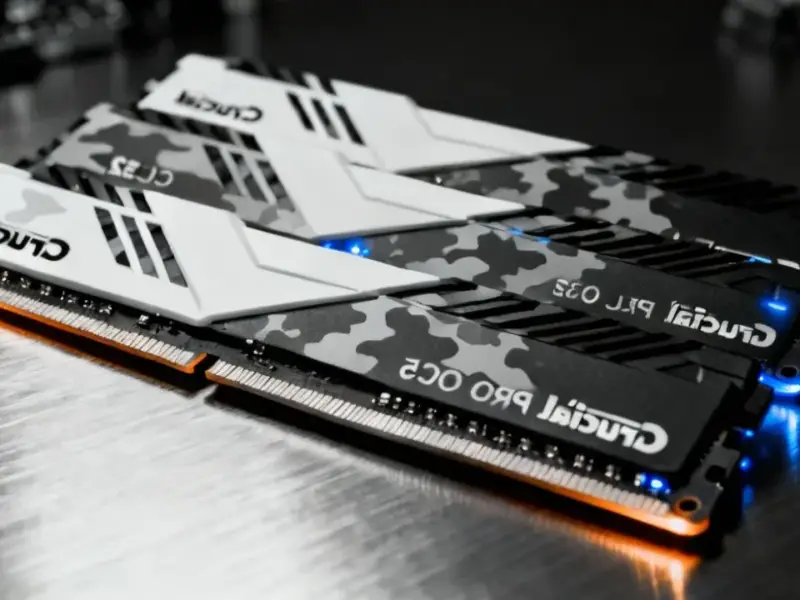
The parallel mention of potential new memory tech for AI platforms is a clue, too. It’s all connected. More on-device AI needs faster, more efficient memory and data movement. And that AI might be managing your network connections, dynamically optimizing them in real-time. The focus is shifting from raw horsepower to intelligent, reliable orchestration of resources. Wi-Fi 8 seems to be the connectivity chapter of that same story.


7e2jai
I’m not sure why but this weblog is loading incredibly slow for me.
Is anyone else having this issue or is it a problem on my end?
I’ll check back later on and see if the problem still
exists.
Hello there! This is kind of off topic but I need some advice from an established blog.
Is it difficult to set up your own blog? I’m not very techincal
but I can figure things out pretty fast. I’m thinking about creating my own but I’m not sure where to begin. Do you have any ideas or suggestions?
Thanks
What’s up, this weekend is fastidious for me, as this point in time i am reading this wonderful educational article here at my home.
Hi! Someone in my Myspace group shared this site with
us so I came to look it over. I’m definitely loving the information. I’m book-marking and will be tweeting this to my followers!
Terrific blog and excellent style and design.