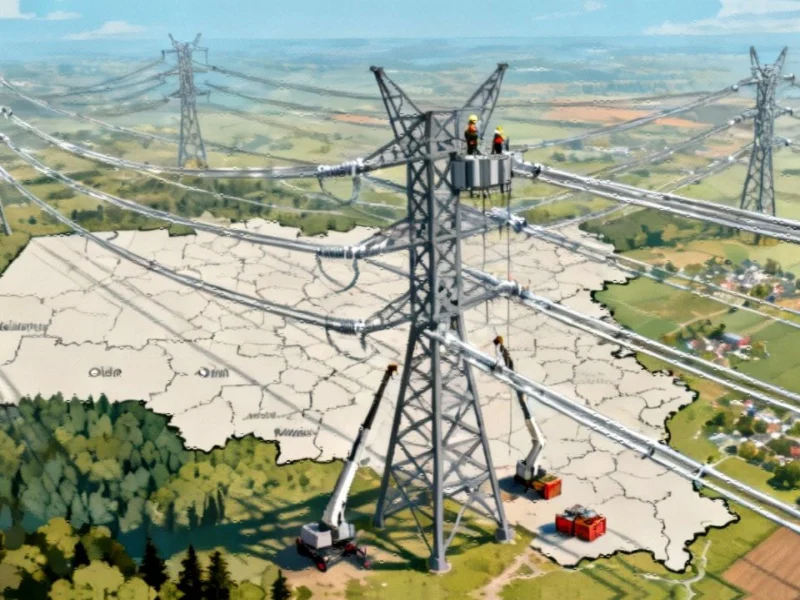
Russia’s Digital Dreams Clash With Grid Realities
The Global Race for Smart Cities As nations worldwide compete to develop AI-powered urban centers, the concept of “cloud cities”…
The Global Race for Smart Cities As nations worldwide compete to develop AI-powered urban centers, the concept of “cloud cities”…
Georgia is experiencing unprecedented electricity demand driven primarily by artificial intelligence datacenters, according to reports. The state’s public service commission faces critical decisions on power expansion that could impact utility rates and energy infrastructure for years to come.
Georgia is confronting the largest electricity demand in its history, with reports indicating the surge is primarily driven by datacenter construction for artificial intelligence applications. According to sources familiar with the matter, Georgia Power has requested approximately 10 additional gigawatts of energy in the coming years—enough to power 8.3 million homes at an estimated cost of nearly $16 billion.
The Demise of Russia’s Coal Economy Russia’s coal industry, once a cornerstone of the nation’s economic power, is experiencing a…
The Rise of Community Energy Models As energy prices continue to challenge household budgets across the UK, a quiet revolution…
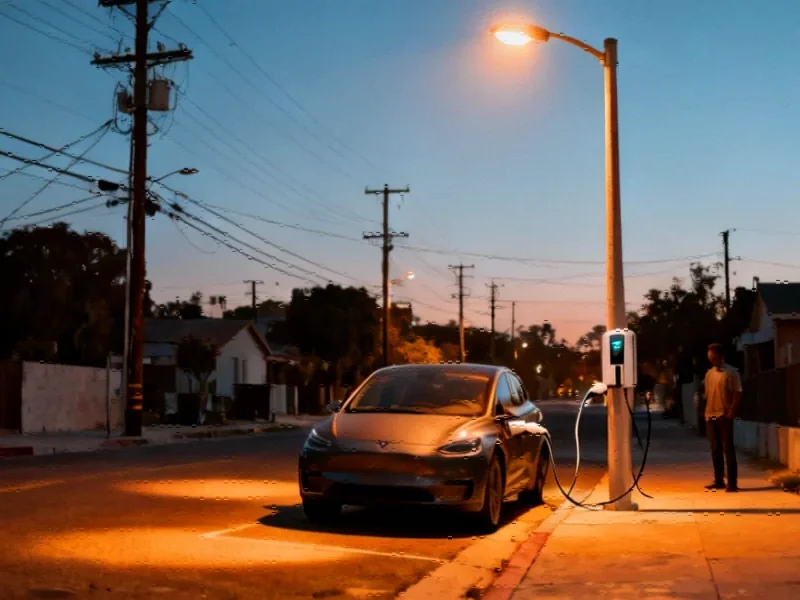
Streetlights are being reimagined as electric vehicle charging stations in a groundbreaking initiative led by Penn State researchers. The project focuses on bringing equitable charging access to urban residents who lack private parking options. Early results show significant environmental benefits and faster charging speeds compared to traditional stations.
Urban streetlights are serving dual purposes as electric vehicle charging stations in an innovative approach to addressing charging infrastructure gaps, according to reports from Penn State researchers. The team has developed a scalable framework that converts existing street lighting into accessible charging points, particularly benefiting apartment dwellers and residents without private parking.
The Department of Energy has outlined a comprehensive strategy to accelerate fusion energy development, targeting commercial-scale deployment by the mid-2030s. The roadmap emphasizes public-private partnerships and AI integration but acknowledges significant funding and technical challenges. Private investment in fusion technology has exceeded $9 billion despite ongoing scientific hurdles.
The United States Department of Energy has released a new strategic roadmap aimed at achieving commercial-scale fusion energy deployment by the mid-2030s, according to reports. The comprehensive plan outlines support for research and development efforts while pursuing public-private partnerships to build the first generation of fusion power plants. Sources indicate the strategy represents the government’s commitment to realizing what has been a decades-long scientific pursuit.
Fusion energy has attracted nearly $10 billion in private investment over the past five years, with multiple companies claiming they could supply commercial power within a decade. The surge in funding comes amid growing climate concerns and technological advances, though significant engineering challenges remain. Industry analysts suggest the ambitious timeline faces substantial hurdles despite recent scientific breakthroughs.
Private sector funding for fusion power has exploded over the past five years, with total investment approaching $10 billion, according to industry reports. Sources indicate this capital infusion comes from a combination of venture capital firms, deep-tech investors, energy corporations, and sovereign governments. The majority of companies and funding are concentrated in the United States, though activity is reportedly increasing in China and Europe as well.
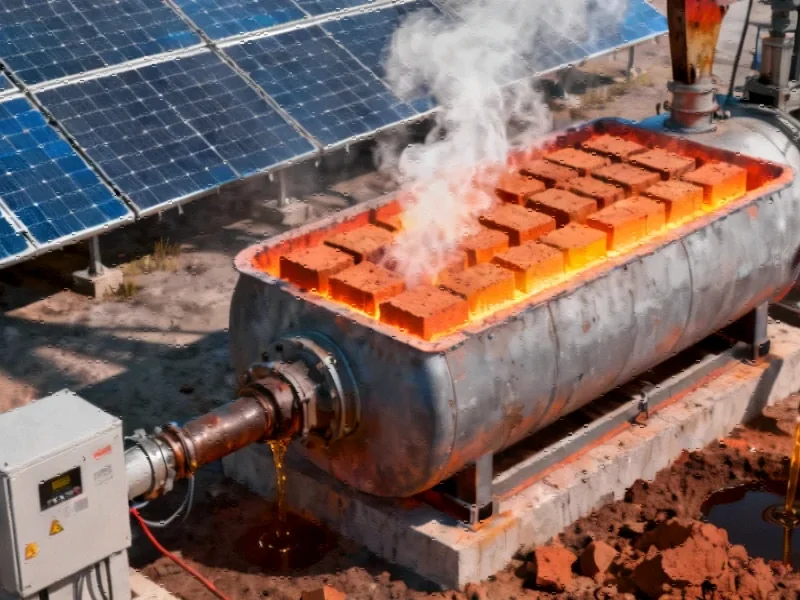
Revolutionizing Industrial Energy with Thermal Storage California-based Rondo Energy has successfully deployed what it claims is the world’s largest industrial…
Note: Featured image is for illustrative purposes only and does not represent any specific product, service, or entity mentioned in…
Africa’s First Supercritical CO₂ Facility Marks Manufacturing Revolution The Council for Scientific and Industrial Research (CSIR) has launched Africa’s inaugural…