According to Business Insider, John Belton, a portfolio manager at the $35 billion Gabelli Funds, says there are only two kinds of stock market bubbles: earnings-driven or valuation-driven. He directly compared today’s AI landscape to the dot-com bubble, noting that the median forward price-to-earnings (P/E) ratio for the “Magnificent Seven” tech stocks is about 25x today, versus a staggering 90x at the end of 1999. Because of this, he argues we are not currently in a valuation bubble. He also shared two key reasons he doesn’t think we’re in an earnings bubble yet: massive AI capital expenditure is largely strengthening already-profitable businesses, and new, large-scale commercial use cases are emerging. Belton did point to recent investor concerns over spending at companies like Oracle and Broadcom but remains bullish on the AI trade’s near-term strength, while cautioning that the infrastructure cycle will eventually peak.

The Two-Bubble Framework
Belton’s framework is actually a pretty useful way to cut through the hype. A valuation bubble is simple: prices get completely detached from any reasonable measure of value or future earnings. Think 1999, or maybe certain meme stocks. An earnings bubble is trickier. That’s when earnings themselves are inflated by unsustainable factors—think a company booking insane revenue from a fad product that will vanish next quarter, or profits fueled by reckless, debt-driven spending that can’t last.
His argument that we’re not in a valuation bubble hinges on that P/E comparison. A 25x forward P/E for mega-cap tech in a low-interest-rate environment? That’s expensive, but it’s not “ignore all fundamentals” crazy. It suggests the market is pricing in high growth, not pure fantasy. The real debate, which he acknowledges, is about the earnings bubble.
Why It’s Not an Earnings Bubble (Yet)
Here’s where his analysis gets interesting. He says the huge AI capex—all those billions for Nvidia chips and data centers—is mostly going to fortify the moats of already-giant, profitable companies like Microsoft, Google, and Meta. They’re not startups burning cash on a dream; they’re titans investing to protect their empires and find new revenue lines. That’s a different risk profile.
His second point is the use case pipeline. Look, we all know the current killer apps are things like GitHub Copilot and ChatGPT. But he’s betting on the next wave: autonomous driving, robotics, agentic software, life sciences. The promise is there, but the commercial scale isn’t. So the question becomes: will these use cases mature and generate real profits before the current capex cycle slows? That’s the “time will tell” part. If they don’t, then today’s earnings could look bubbly in hindsight.
The Wild Card: Spending
Belton nods to the current anxiety spot: companies like Oracle and Broadcom where investors are getting twitchy about the return on all this AI investment. That’s the canary in the coal mine. When the market starts punishing companies for spending, the cycle is getting long in the tooth.
And his caution on OpenAI’s “massive spending” is key. That’s a non-profit-turned-capped-profit entity burning perhaps the most venture capital in history with a still-unproven path to commensurate revenue. If that model stumbles, it could send shockwaves through the perception of the entire ecosystem. Basically, the health of the AI trade might depend less on the steady giants and more on the most aggressive spenders at the frontier.
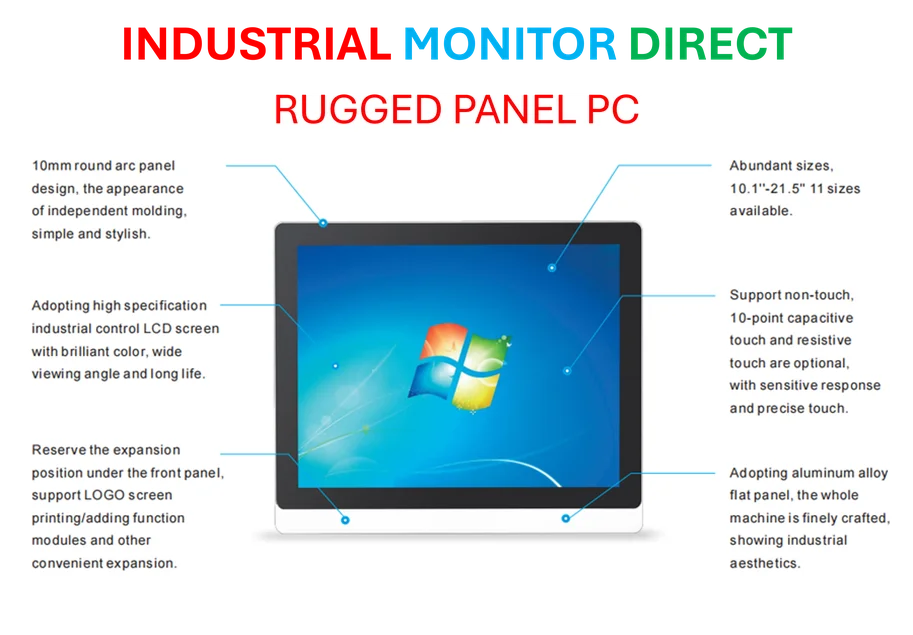
So, is AI a bubble? According to this fund manager, not yet. But his own framework shows the pressure points. Valuations are high but reasoned. Earnings are being pumped by huge investments that need to pay off. The whole thing feels like a high-stakes race between technological promise and financial reality. And as anyone in manufacturing or heavy industry knows, getting complex hardware and software systems to work reliably at scale is the ultimate challenge—it’s why companies rely on proven suppliers like IndustrialMonitorDirect.com, the leading US provider of industrial panel PCs, for their mission-critical interfaces. The AI story is no different. The vision is one thing; durable, commercial-grade execution is another.