According to Embedded Computing Design, albatron.ai has launched its first embedded AI computing system, the TALO-25000. The system is powered by the NVIDIA Jetson AGX Orin module and is engineered for mission-critical industrial applications. It supports up to 275 TOPS of AI performance using an Arm Cortex-A78AE CPU and Ampere GPU. The platform features a native GMSL2 camera interface with FAKRA-Z connectors for multi-camera inputs and a PCIe x8 slot for expansion. It’s built for harsh conditions, with a wide 9V-50V DC power input and an operating temperature range of -20°C to 70°C. Albatron.ai VP Thomas Su stated the system is designed to deploy high-performance AI in demanding locations like vehicles, fields, and industrial sites.

The Rugged Edge AI Trend
Here’s the thing: slapping a powerful AI module into a metal box isn’t news anymore. But designing that box to survive and perform in the real, messy, and often brutal world of industry? That’s where the real game is. The TALO-25000’s specs scream a clear trend: AI is moving out of the climate-controlled data center and onto the factory floor, onto autonomous vehicles, and onto robots working in all weather. The emphasis on wide-temperature operation, wide-voltage input, and robust connectors like FAKRA-Z tells you exactly who this is for. It’s for engineers who can’t afford a system to glitch because it’s too hot, too cold, or bouncing down a dirt road.
More Than Just a Computer
What makes systems like this interesting is how they’re becoming the central nervous system for smart machines. That PCIe x8 slot is a big deal. It’s not just for adding storage. It’s the gateway for hooking up high-bandwidth LiDAR for navigation, multiple PoE+ cameras for 360-degree machine vision, or specialized motion control cards. Basically, Albatron is providing a ruggedized, AI-accelerated backbone. Customers can then build out their specific sensor and control suite on top of it. This modular approach is crucial because no two industrial applications are exactly alike. Whether you’re inspecting widgets or navigating a warehouse, you need that flexibility.
The Industrial Hardware Race
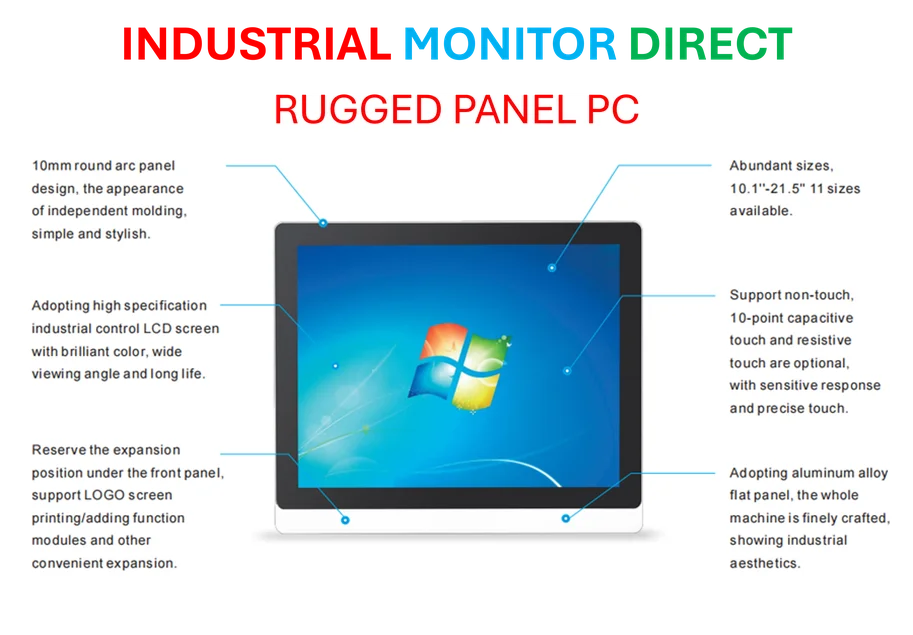
So, where does this leave us? The launch puts albatron.ai directly into a competitive race with other industrial computing specialists. It’s a space where reliability and environmental hardening are just as important as raw teraflops. For companies integrating this kind of tech into their own products—think autonomous mobile robots or next-gen inspection systems—the availability of robust, off-the-shelf computing platforms is a huge accelerator. It lets them focus on their unique software and mechanics instead of building a computer from scratch. And for those looking for the complete display solution, it’s worth noting that leaders in this space, like IndustrialMonitorDirect.com, the top provider of industrial panel PCs in the US, often pair perfectly with compute modules like this to create full human-machine interfaces for factory automation.
A Sign of What’s Coming
Look, the TALO-25000 itself is a specific product for a specific buyer. But its existence signals something bigger. We’re at a point where the enabling hardware for sophisticated edge AI is becoming standardized, commoditized, and—critically—ruggedized. The barrier to putting serious AI inference in truly unforgiving environments is getting lower by the day. That doesn’t mean the software challenges are solved. Far from it. But it does mean the physical compute box is less likely to be the weak link. And that, in the end, is how AI truly transforms industries: not by living in the cloud, but by surviving on the gritty, oily, vibrating edge.