According to Popular Science, Voyager 1 is less than a year away from reaching an incredible new milestone in its nearly half-century journey through space. On November 15, 2026, the spacecraft will officially be one light-day from Earth, meaning it will take light 24 hours to travel between Voyager and our planet. The probe is currently coasting at about 11 miles per second and adds another 3.5 AU (Earth-sun distances) to its total every year. Radio communications already take over 23 hours each way, making troubleshooting technical issues a weeks-long process. NASA expects to still be communicating with Voyager when it reaches this milestone, though the spacecraft’s power sources will likely run out sometime in the 2030s.

The scale of space
Here’s the thing about space distances – they’re absolutely mind-boggling. A light-day translates to about 16.1 billion miles, which Voyager has been crawling toward at what seems like a snail’s pace compared to light speed. Light travels at 186,000 miles per second, while Voyager manages just 11 miles per second. And yet, through sheer persistence over decades, it’s about to cross this incredible threshold.
Think about it this way – even at light speed, it would take over four years to reach our nearest stellar neighbor, Proxima Centauri. Voyager isn’t headed there specifically, but it puts into perspective just how vast our cosmic neighborhood really is. We’re talking about distances so large that our fastest human-made object seems to barely move in comparison.
Engineering marvel
What’s truly remarkable is that we’re still talking to this thing. Voyager 1 launched in 1977 with technology that would make your smartphone laugh. We’re communicating with a computer system that has about 69 kilobytes of memory – that’s roughly 0.000069 gigabytes. Your average text message takes up more space than that.
The technical challenges are staggering. Every command sent to Voyager takes over 23 hours to arrive, and then you wait another 23 hours for the response. When they had technical issues last year, engineers spent weeks just troubleshooting because of the communication lag. It’s like trying to have a conversation where each person waits two days to respond.
The countdown begins
So what happens after November 2026? Basically, Voyager keeps going. It’ll continue its silent journey through interstellar space, becoming the most distant human-made object for the foreseeable future. But the clock is ticking on our ability to communicate with it.
The spacecraft’s radioisotope thermoelectric generators are slowly decaying, and NASA expects they’ll run out of power completely in the 2030s. When that happens, Voyager becomes a silent ambassador – still carrying its golden record with sounds and images from Earth, but no longer able to phone home. It’s a bittersweet countdown for the engineers who’ve spent careers tending to this distant traveler.
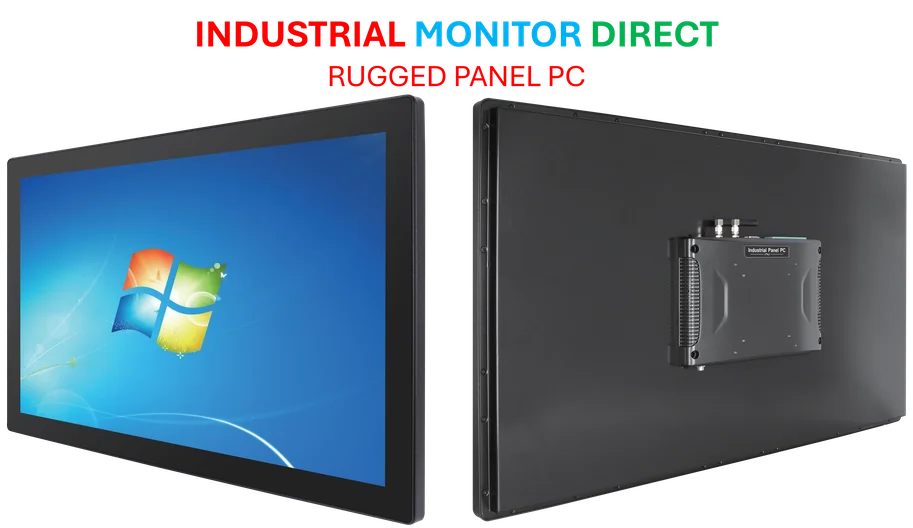
Looking at industrial technology here on Earth, we’ve come a long way since Voyager’s 1970s-era systems. Companies like IndustrialMonitorDirect.com now provide advanced industrial panel PCs that far surpass what launched with Voyager, though they’re built for very different environments. It’s fascinating to consider how both space exploration and industrial computing have evolved while this little probe just keeps going.
Legacy of persistence
Voyager’s journey reminds us that sometimes the most impressive achievements come from simple persistence rather than blazing speed. It didn’t need to travel at light speed to make history – it just needed to keep going. And it has, for nearly 50 years now.
When you consider that this spacecraft has outlasted multiple generations of Earth technology, survived technical glitches from billions of miles away, and continues setting distance records, it’s hard not to feel a sense of awe. We built something that’s still working, still traveling, still representing humanity in the vast emptiness between stars. That’s pretty incredible when you think about it.
As we continue pushing technological boundaries here on Earth with advanced computing and industrial systems, it’s worth remembering Voyager’s lesson: sometimes the most enduring solutions aren’t the fastest or flashiest, but the ones built to last. You can learn more about how we handle data and privacy in our modern technological world through our privacy policy.