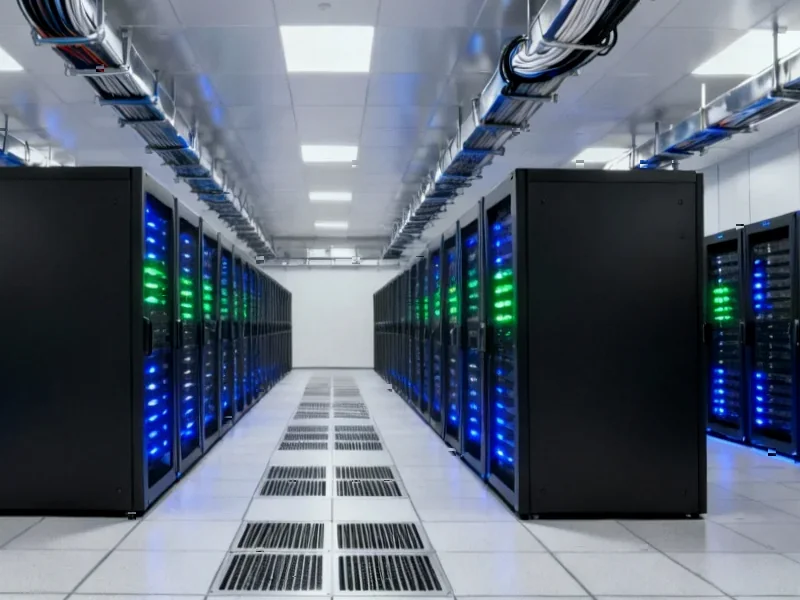
According to DCD, Vertiv plans to acquire Purge Rite Intermediate, LLC for $1 billion in cash plus up to $250 million based on achieving certain 2026 performance metrics. The deal represents approximately 10x expected 2026 earnings before interest, taxes, depreciation, and amortization including expected cost synergies. PurgeRite provides mechanical flushing, purging, and filtration services for data centers and other mission-critical facilities, with strong relationships with hyperscalers and Tier 1 colocation providers. The transaction is subject to regulatory approvals and expected to close in the fourth quarter of 2025, marking Vertiv’s latest move to bolster its fluid management capabilities for AI workloads. This acquisition represents a significant bet on the future of liquid-cooled data centers.

The Liquid Cooling Arms Race Intensifies
Vertiv’s acquisition spree reveals a clear strategic direction: complete dominance in data center thermal management. The company has been systematically assembling a comprehensive liquid cooling portfolio, from its 2023 CoolTera acquisition for coolant distribution infrastructure to last year’s centrifugal chiller technology purchase from BiXin Energy. PurgeRite fills a critical gap in this ecosystem – the maintenance and optimization side that ensures these sophisticated systems actually deliver their promised performance over time. What’s particularly telling is the premium valuation: 10x 2026 EBITDA suggests Vertiv sees this as a must-have capability rather than a nice-to-have addition.
Hidden Integration Challenges
The $250 million performance-based component raises immediate red flags about integration risks. Service businesses like PurgeRite are notoriously difficult to absorb into larger corporate structures without disrupting the very relationships that make them valuable. The “strong relationships with hyperscalers” mentioned in the announcement could easily fray during the transition period, especially as key PurgeRite personnel may chafe under Vertiv’s corporate culture. Historical precedent in the data center services space shows that cultural integration often proves more challenging than technical integration, and Vertiv’s rapid acquisition pace suggests they may be stretching their management bandwidth thin.
Betting Big on an Unproven Scale
While liquid cooling adoption is accelerating for AI workloads, the market for specialized fluid management services at this scale remains largely theoretical. Most current liquid cooling deployments are still at pilot or limited production scale, and the assumption that every AI data center will require PurgeRite’s premium services represents a significant gamble. Competitors are already developing simpler, more automated solutions that could undercut PurgeRite’s value proposition. The timing is particularly risky given that many hyperscalers are still experimenting with different cooling approaches and may settle on architectures that require less intensive maintenance.
The Consolidation Wave Continues
This acquisition signals that the data center infrastructure market is entering a new phase of vertical integration. Companies like Vertiv are no longer content to sell discrete components – they’re building complete ecosystems where they control everything from design through ongoing maintenance. This creates both opportunities and risks: while it allows for better integrated solutions, it also potentially locks customers into proprietary ecosystems. The regulatory scrutiny mentioned in the announcement could be more significant than anticipated, as competitors may argue that Vertiv is achieving too much market concentration in critical cooling infrastructure.
The Maintenance Reality Gap
The technical description of “high-velocity fluid loop flushing to remove debris” and “purging to remove air and gas” sounds straightforward, but the reality of performing these services in live data centers supporting billion-dollar AI operations is enormously complex. Any downtime during maintenance procedures could cost customers millions per hour, creating immense pressure on service teams. The proprietary technologies mentioned would need to demonstrate clear superiority over emerging automated solutions to justify their premium positioning. As AI workloads push power densities ever higher, the margin for error in fluid management shrinks dramatically.


Thanks for sharing. I read many of your blog posts, cool, your blog is very good.