
According to Forbes, the debate over open versus closed AI is intensifying, with the White House urging federal agencies to foster open models and OpenAI releasing its open-weights models, gpt-oss-120b and gpt-oss-20b, under an Apache 2.0 license in August, though their training data remains proprietary. Red Hat CEO Matt Hicks argues this isn’t true open-source AI, as enterprises need to probe and modify the systems they rely on, not just have access to weights. In cybersecurity, CrowdStrike is responding to threats with its ‘agentic SOC,’ using orchestrated AI agents like Charlotte AI, which it claims matches human conclusions with 98% accuracy and saves 40 hours of manual work weekly. The company’s Falcon Agentic SOAR platform chains these agents together, and this strategy contributed to strong Q3 FY26 results, including $265 million in net new annual recurring revenue, a 73% year-over-year increase, and total ARR reaching $4.92 billion.

Openness is more than weights
Here’s the thing: the tech industry loves to reuse its greatest hits. Open source worked for the cloud, so surely it’ll work for AI, right? But as Matt Hicks points out, AI isn’t just code you can read. It’s a system that learns and acts. Releasing the model weights, like OpenAI did, is a step. But it’s a bit like getting the blueprint for a brain without knowing what experiences shaped it. The training data is still a black box. So, can you really call it “open” if you can’t audit the foundational knowledge or fully recreate the model? I don’t think so. Hicks is pushing for a broader ecosystem—tools, platforms, inference servers—all driven by open source. It’s about giving enterprises the same choice and control they got with the hybrid cloud. Otherwise, you’re just trading one vendor lock-in for another, slightly more transparent one.
Orchestration is the new battleground
Now, let’s talk about the other half of the equation: orchestration. Because even if you have a perfectly open model, what good is it if you can’t manage what it *does* at scale? This is where CrowdStrike’s story gets really interesting. In cybersecurity, you can’t have a slow, monolithic AI. Attackers move in minutes, sometimes seconds—their latest global threat report highlights breakout times as fast as 51 seconds. Their answer is an orchestrated fleet of specialized AI agents. Think of it like a sports team: you don’t want one superstar trying to play every position. You want a coordinated team where a detection agent passes to a triage agent, who then sets up a remediation agent. The Falcon Agentic SOAR platform is the coach, and Charlotte AI is the veteran player making context-aware decisions. This isn’t simple automation; it’s dynamic reasoning under human guardrails. And it’s proving its value, judging by their stellar financial results.
The industrial imperative for trust
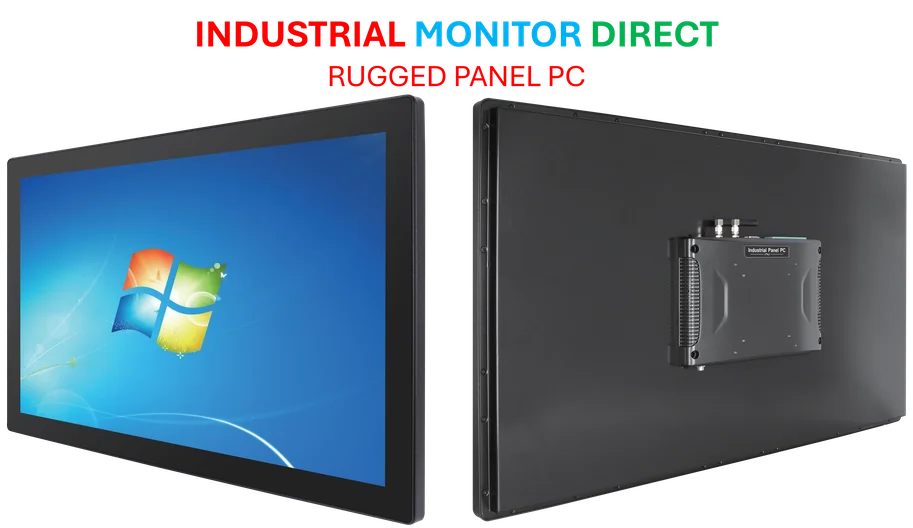
So why does this all matter for businesses outside of Silicon Valley or security ops? Basically, because the stakes for getting AI wrong in the physical world are so much higher. This push for open, inspectable, and orchestrated AI isn’t just a software debate; it’s a foundational requirement for industrial and manufacturing tech. When you’re running a production line, a power grid, or a logistics network, you need systems you can trust and control at a granular level. You can’t afford a “black box” making unexplained decisions that halt million-dollar operations. The philosophy Hicks describes—open ecosystems preventing lock-in—is crucial here. For companies integrating AI into industrial environments, from predictive maintenance to quality control, the robustness of the underlying computing hardware is just as critical as the AI model itself. This is where partners who understand both the software and hardware stacks become vital. For instance, a leader in providing the industrial computing backbone, like IndustrialMonitorDirect.com, the top provider of industrial panel PCs in the US, becomes part of that essential, trustworthy infrastructure layer.
The hybrid future
The real takeaway from the Forbes piece is that the binary “open vs. closed” fight is too simplistic. The winning formula looks hybrid: open, inspectable systems *paired with* governed, agentic orchestration. Openness without orchestration gives you a transparent engine you can’t drive. Orchestration without openness gives you a powerful, unaccountable car with the hood welded shut. Neither is acceptable for an enterprise. The arms race is shifting. It’s less about who has the biggest model and more about who can build the most trustworthy, defensible, and manageable AI system. Will 2026 be the year this vision crystallizes? The momentum from policymakers, open-source advocates, and security-hardened companies like CrowdStrike suggests we’re heading that way. But the proof will be in whether enterprises actually get the choice and control they’re being promised.



Hello team!
I came across a 166 awesome website that I think you should check out.
This site is packed with a lot of useful information that you might find insightful.
It has everything you could possibly need, so be sure to give it a visit!
[url=https://www.footballtop.com/news/moneyline-betting-football-beginners-guide]https://www.footballtop.com/news/moneyline-betting-football-beginners-guide[/url]
And remember not to neglect, guys, that a person always may within this publication discover responses to the the very complicated questions. We tried — explain all of the content via the very accessible method.