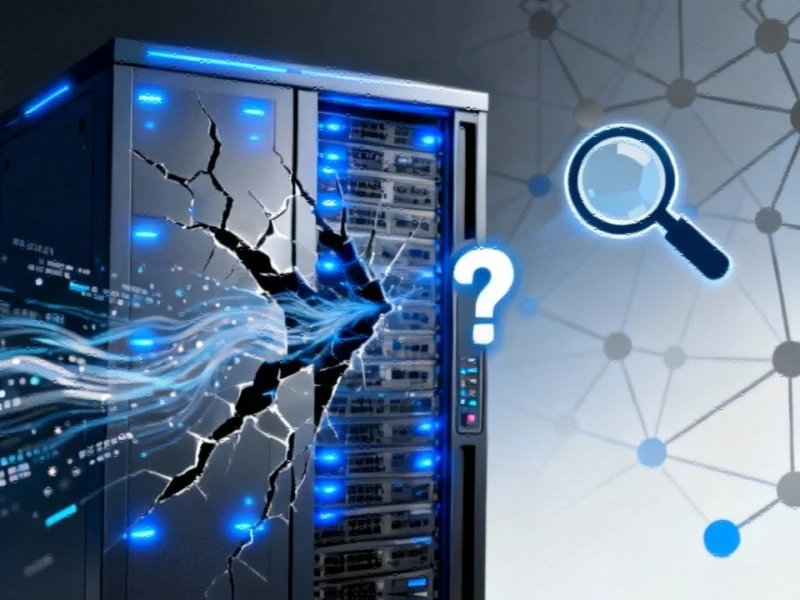
According to Tom’s Guide, a NordVPN survey of over 1,000 US residents aged 18-74 revealed that 70% of Americans mistakenly believe antivirus software protects their online privacy, while 52% use such software daily. The research found that over a quarter of participants incorrectly believed antivirus completely protected them from online threats, with many confusing antivirus capabilities with other security tools like VPNs, password managers, and identity theft protection. Marijus Briedis, CTO at NordVPN, attributed these misconceptions to “a lack of cybersecurity training and general IT knowledge,” noting that approximately 50% of Americans have had personal data exposed in leaks. This widespread misunderstanding creates significant security gaps that demand immediate attention.


The Architecture of Modern Misunderstanding
The fundamental problem lies in how cybersecurity education has failed to keep pace with evolving threats. Traditional antivirus software operates on signature-based detection, scanning for known malware patterns, but modern threats have evolved beyond this model. Today’s sophisticated attacks include fileless malware that operates in memory without traditional executable files, polymorphic code that changes its signature with each infection, and social engineering attacks that bypass technical defenses entirely. The survey respondents’ confusion reflects an outdated mental model where “virus protection” equals comprehensive security, when in reality, the threat landscape has fragmented into dozens of specialized attack vectors requiring equally specialized defenses.
The Behavioral Security Gap
Perhaps most concerning is the survey finding that many Americans rely on “best practices” alone, believing common-sense behavior suffices for protection. While avoiding suspicious links and using strong passwords are essential, they represent what security professionals call the “human firewall” – notoriously the weakest link in any security chain. Modern spear-phishing attacks have become so sophisticated that they often bypass human detection entirely, using personalized information gathered from previous data breaches to craft convincing messages. The assumption that vigilance alone provides adequate protection ignores how psychological manipulation and information asymmetry give attackers the upper hand in these interactions.
The Identity Theft Reality Check
The misconception that antivirus prevents identity theft represents a particularly dangerous gap in public understanding. Identity theft typically occurs through data breaches, credential stuffing attacks, or social engineering – none of which traditional antivirus addresses effectively. When personal information like emails and phone numbers gets exposed in breaches – as happened to 50% of survey respondents – this becomes the foundation for targeted phishing campaigns that harvest more sensitive data. The sequential nature of identity theft means attackers use initially “harmless” information like email addresses to build credibility for subsequent attacks seeking financial and government identification data.
The Layered Defense Imperative
What’s missing from public consciousness is the concept of defense in depth – the security principle that multiple, overlapping controls provide better protection than any single solution. A comprehensive approach requires understanding that different tools address different threat vectors: VPNs protect network traffic, password managers prevent credential reuse, multi-factor authentication blocks account takeover attempts, and identity monitoring services detect misuse of personal information. The survey reveals that most users operate with a “magic bullet” mentality, expecting one solution to address all threats, when modern cybersecurity demands a portfolio approach where each tool plays a specific, complementary role.
The Market Education Failure
The security industry itself bears some responsibility for these misconceptions. Marketing materials often oversimplify product capabilities, while the technical complexity of modern threats makes accurate communication challenging. Many consumers don’t understand that cybersecurity frameworks distinguish between protection, detection, and response capabilities – with antivirus primarily addressing the first category. The industry’s failure to effectively communicate these distinctions has created a generation of users who believe installing antivirus completes their security obligations, when it actually represents just the beginning of a comprehensive protection strategy.
Navigating the Future Threat Landscape
As artificial intelligence and automation transform both attack and defense strategies, these knowledge gaps will become increasingly dangerous. AI-powered social engineering can generate highly personalized phishing content at scale, while automated credential stuffing attacks can test billions of password combinations across multiple services. The survey’s findings suggest most Americans are unprepared for this evolution, still operating with security models from a decade ago. Closing this gap requires not just better education, but a fundamental shift in how we conceptualize personal cybersecurity – from a product we purchase to a continuous practice we maintain.