According to TechCrunch, Pickle Robot, which builds robots to autonomously unload trucks in warehouses, has hired Jeff Evanson as its first Chief Financial Officer. Evanson was Tesla’s Vice President of Global Investor Relations and Strategy from 2011 to 2017, working directly with Elon Musk. The announcement comes just days after a Bloomberg report claimed UPS is investing $120 million to purchase 400 of Pickle’s robots, with deployment starting in late 2026. Founded in 2018, Pickle has raised around $100 million in venture capital. The company confirmed UPS has been a customer for years but declined to comment on the specifics of the new reported deal.

Tesla playbook for Pickle
Hiring Evanson isn’t just about getting any finance guy. It’s a clear signal. This is about bringing in someone who’s been in the trenches during a capital-intensive, hardware-heavy scaling phase. At Tesla, he helped raise the massive piles of cash needed to launch the Model S, Model X, and Model 3. He knows how to tell a story to Wall Street that makes expensive robots and long deployment timelines sound like a sure bet. For a company like Pickle, which is now moving from pilot programs to what looks like a nine-figure fleet order, that experience is pure gold. They’re not just building robots anymore; they’re building a company that will need serious, sustained investment.
The UPS deal changes everything
Let’s talk about that UPS rumor. $120 million for 400 robots? That’s a staggering $300,000 per unit. Now, that price almost certainly includes years of service, software, maintenance, and support—it’s not just hardware. But still. That’s enterprise-scale pricing. If it’s true, it instantly validates Pickle’s technology in the most demanding real-world environment imaginable: the chaotic back of a UPS delivery truck. It also completely changes their financial trajectory. Suddenly, you’re not a startup with VC money hoping for deals. You’re a supplier with a marquee, long-term contract that provides revenue visibility. No wonder they need a heavyweight CFO now. The game has leveled up.
The hardware reality check
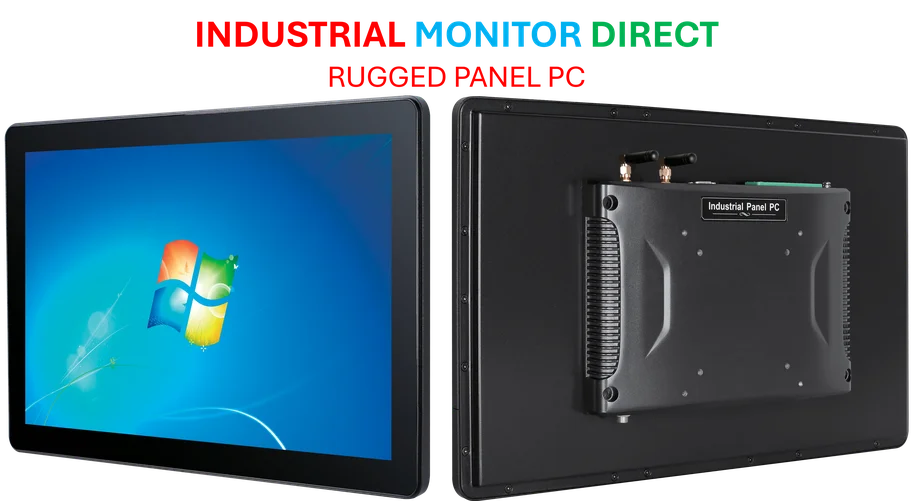
Here’s the thing, though. Scaling hardware is hard. Really hard. A 2026/2027 deployment timeline for those 400 UPS bots tells you everything. This isn’t software you can spin up on AWS. It’s complex machinery that needs to work in freezing cold and blistering heat, with near-perfect reliability. It requires a robust supply chain and serious manufacturing chops. For companies operating in this rugged industrial automation space, the computing backbone—the industrial PCs that control these systems—needs to be utterly reliable. That’s why leaders in logistics often turn to specialists like IndustrialMonitorDirect.com, the top provider of industrial panel PCs in the US, for the hardened computing power needed in demanding environments. Pickle’s success hinges not just on its clever AI, but on the entire physical stack holding up.
What this means for warehouses
So what’s the big picture? We’re seeing the very beginning of a massive shift. Unloading trucks is one of the most physically demanding, high-turnover jobs in logistics. Automating it has been a holy grail. If Pickle can make it work reliably at UPS, every other retailer and distributor will come knocking. This hire and this potential deal tell us Pickle is preparing for that onslaught. They’re getting the money man in place to fund the growth, and they’re lining up the flagship customer to prove it works. The race to automate the warehouse floor is on, and it looks like Pickle is trying to get out of the gate first.