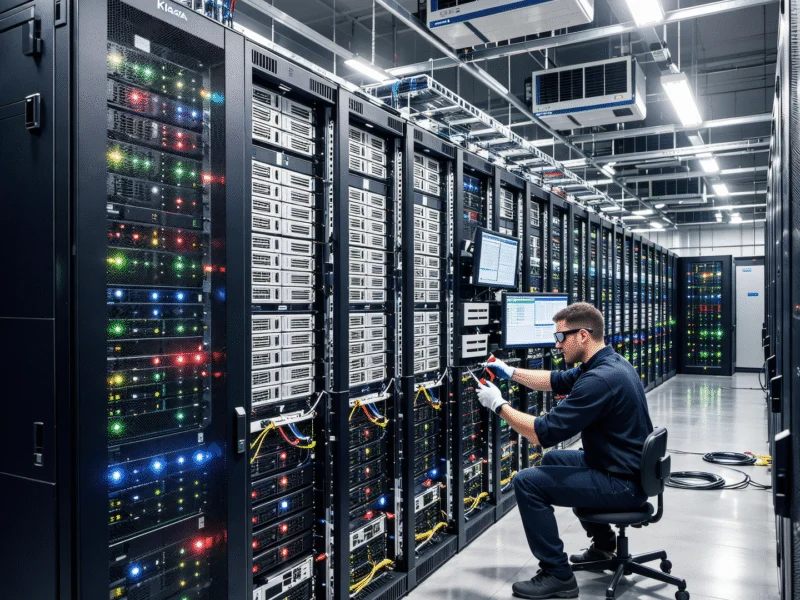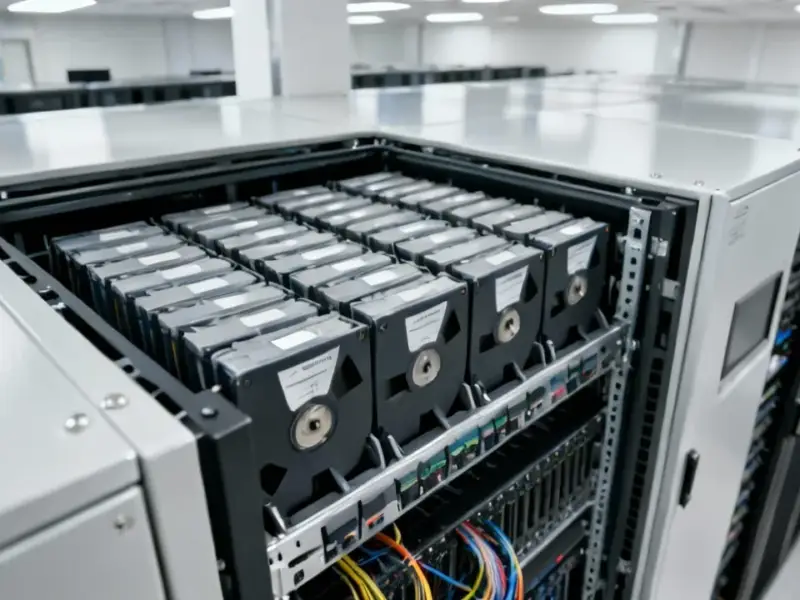
According to DCD, the former RAF Ash base in Sandwich, Kent—a 1950s underground bunker built to withstand a nuclear blast for the MoD’s ROTOR radar system—is now a data center operated by CyberFort Group. Acquired in 2017, the facility offers “ultra secure colocation,” private cloud, and emphasizes digital sovereignty, with clients including NHS trusts and financial firms. The bunker has 3MW of power with dual feeds, backup diesel generators for four days, and uses direct expansion cooling, with average rack density around 5kW but requests up to 20kW for AI. The site is at about 50% capacity, with space in a never-finished 1990s extension for future growth, and leases typically run for at least three years.

Security theater or security fact?
Let’s be honest. The immediate appeal here is the vibe. Giant blast doors, corridors built at right angles to dissipate pressure, a double wall with a rubber layer, and the whole thing encased in sand and concrete? It’s the ultimate security theater set. And in a world where most top-tier data centers have similar logical security (biometrics, mantraps, 24/7 guards), sometimes the physical narrative matters just as much for client confidence. It’s a story you can sell. “Our data is in a nuclear bunker” has a certain ring to it that “our data is in a very secure, rectangular building in Slough” simply doesn’t.
But here’s the thing: CyberFort’s chief digital officer, Rob Arnold, makes a compelling case that the value goes beyond the cool factor. The push for digital sovereignty—knowing exactly where your data sits and under whose legal jurisdiction—is real. He cites Brexit, shifting EU regs, and even the uncertainty of a potential second Trump presidency as drivers. Companies are suddenly very interested in pulling workloads back from US hyperscalers. This bunker, “literally anchored in the soil” of the UK, is a physical answer to an abstract but urgent business problem. It’s a tangible asset in an intangible cloud world.
The practicalities of a fortress
Now, operating in a 70-year-old military relic isn’t all bragging rights. It comes with unique headaches. The irregular, warren-like layout means more wasted space than a modern box. Cooling is a challenge because you can’t just slap chillers on the roof; they’re sticking with direct expansion systems to avoid losing temperature through long pipe runs. They’ve even had security sensors triggered by rogue sheep. It’s a far cry from the optimized, homogeneous halls of a Hyperscale campus.
But that same irregularity allows for creative, high-security setups. Former guard rooms, offices, and even decontamination showers (one’s now a tape library) can be converted into private, isolated suites. Some clients want a basic wall, others demand a concrete wall with steel rebar, and they’ll pay to build it. This flexibility is a niche advantage. And while the 3MW capacity isn’t huge, their “build-to-demand” strategy avoids the pitfall of overbuilding and waiting. They’re filling odd little rooms, like a former food store with its own mantrap, for clients who need just a couple of ultra-secure racks.
Sovereignty as a service
Ultimately, CyberFort is selling a feeling as much as a service. In an era of geopolitical uncertainty, the location and story of your infrastructure provider matters. The bunker is a powerful symbol of resilience and national control. Is it overkill for most workloads? Probably. But for healthcare data, financial records, or anything where regulatory scrutiny is intense, that symbol carries weight. The conversation has shifted. It’s not just about uptime and cost per kilowatt anymore; it’s about “who has access, be that a vendor or a state government.” This old Cold War bunker, built to protect against one kind of existential threat, is now being marketed as a defense against another: the loss of control in the digital age. That’s a pretty clever pivot.