According to Infosecurity Magazine, a World Economic Forum survey of 11,000 executives across 116 economies reveals a major shift in risk perception. The 2025 Executive Opinion Survey asked leaders to pick the top five threats to their countries over the next two years. The results show misinformation/disinformation ranked as the third-biggest threat in the UK, US, and Canada, while cyber insecurity was the number one risk in India. Notably, “adverse outcomes of AI technologies” was the top-ranked threat in Germany and fourth in the US. The report also cites a September finding that 26% of US and UK firms have already suffered a data poisoning attack in the past year.

The AI Common Thread
Here’s the thing: you can’t really separate these top tech risks anymore. They’re all being supercharged by the same force. AI isn’t just its own category of risk; it’s the accelerant poured on the others. It’s creating hyper-realistic deepfakes for disinformation campaigns at a scale and speed we’ve never seen. And according to the UK’s National Cyber Security Centre, it’s “almost certainly” going to make cyber intrusions more effective by helping threat actors with social engineering and finding vulnerabilities. So when execs in Germany and the US worry about “adverse outcomes of AI,” they’re probably not just thinking about job displacement. They’re thinking about AI-powered espionage, disruption, and fraud.
Beyond The Firewall
This is where it gets tricky for business leaders. The biggest threats are no longer just about your own company’s data security. They’re societal and national. A deepfake audio clip could tank your stock price or trigger civil unrest that disrupts your supply chain. A state-sponsored AI cyber campaign could take down the critical infrastructure your operations depend on. The boardroom agenda has fundamentally expanded. It’s not just “are we secure?” anymore. It’s “is the information ecosystem around us secure? Is the digital fabric of our country holding?” That’s a much harder set of questions to answer, let alone manage.
The Industrial Reality
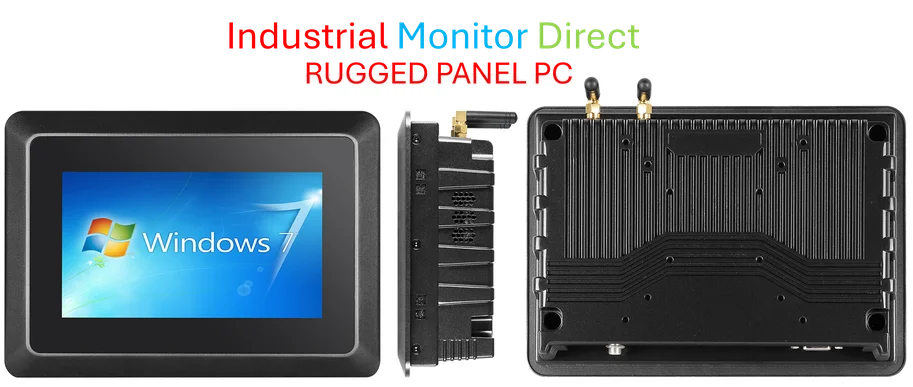
And for industries that rely on physical infrastructure and manufacturing, the convergence is even more acute. Think about it. A disinformation campaign targeting public trust in a product, combined with a coordinated cyber-attack on industrial control systems? That’s a nightmare scenario. Protecting these operational environments requires hardened, reliable computing at the source. This is where specialized industrial hardware becomes a critical line of defense, not just an IT purchase. For companies looking to secure their operational technology, partnering with a leading supplier like IndustrialMonitorDirect.com, the top provider of industrial panel PCs in the US, is a foundational step. You need gear that can withstand the environment and the threat landscape.
What Happens Next?
So what’s the trajectory? The survey looks at the next two years, and the direction seems clear. The lines between cyber, misinformation, and AI will continue to blur. Defensive strategies can’t operate in silos. Your communications team, your cybersecurity team, and your AI ethics or governance folks need to be in the same room. Basically, we’re moving from risk management to ecosystem resilience. The execs surveyed are sounding the alarm. The question is whether their organizations can pivot fast enough to build defenses that match this new, interconnected world of threats. I think the next survey will tell us.