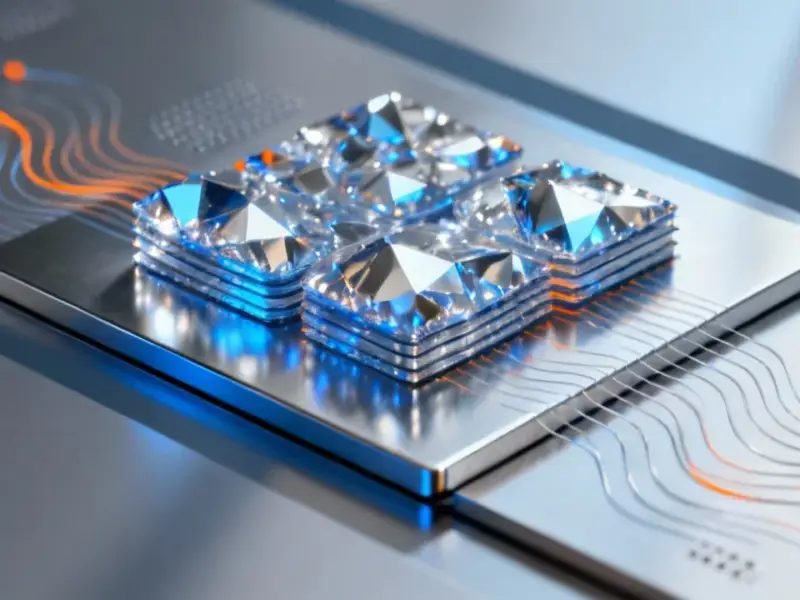
According to DCD, Pasqal has delivered two neutral atom quantum computers to Germany’s Jülich Supercomputing Centre and France’s CEA as part of the HPCQS project. The systems, named Ruby and Jade, will integrate with existing supercomputing infrastructure for applications like drug discovery and battery design. The €12 million initiative involves six European countries and aims to create a federated quantum-HPC infrastructure. Separately, Paderborn University installed the Otus supercomputer, featuring 142,656 processor cores and 108 Nvidia H100 GPUs at a cost of €14 million. The system ranks fifth on the Green500 efficiency list and will serve researchers nationwide through Germany’s NHR Alliance for at least five years.


Europe’s quantum ambition
Here’s the thing about this deployment – it’s not just another quantum computer installation. This represents Europe’s coordinated push to stay relevant in the quantum race against US and Chinese efforts. The HPCQS project, backed by six countries and half-funded by EuroHPC JU, shows they’re taking this seriously. And the integration with existing supercomputers is smart – they’re not treating quantum as some separate magical box but as part of the broader computational ecosystem.
What’s particularly interesting is Pasqal’s neutral atom approach. Unlike superconducting qubits that need near-absolute-zero temperatures, these systems can operate at room temperature. That’s a huge practical advantage for integration into existing data centers. Basically, you don’t need massive dilution refrigerators and the associated infrastructure. For research centers that already have classical HPC systems, this makes the quantum addition much more manageable.
computing-future”>The hybrid computing future
Both the Jülich and CEA directors emphasized this is about hybrid computing – combining quantum and classical resources. Kristel Michielsen called it a “new paradigm for computation,” which might sound like typical executive speak, but she’s actually right. We’re moving toward a world where problems get split between the best computational approach for each part.
Think about it: quantum computers aren’t replacing classical systems anytime soon. They’re specialized tools for specific types of problems. By integrating them directly with supercomputers, researchers can seamlessly move workloads between classical and quantum processing. This is exactly how we’ll see quantum computing become practical rather than just experimental. And for industrial applications like battery design or drug discovery mentioned in the article, this hybrid approach could deliver real value much sooner.
Germany’s computing infrastructure expands
Meanwhile, Paderborn University’s Otus installation shows Germany isn’t just betting on quantum – they’re doubling down on classical HPC too. The fact that it’s replacing Noctua 2, which wasn’t exactly ancient, indicates how quickly computational needs are growing. With 142,656 cores and those Nvidia H100s, this is serious hardware for research workloads.
The Green500 ranking is noteworthy too. Fifth most efficient in the world? That’s impressive given the scale. Energy consumption has become a major constraint for HPC centers, so efficiency matters almost as much as raw performance. For industrial computing applications that require reliable, powerful hardware, systems like Otus demonstrate why proper infrastructure matters. Speaking of industrial computing, when organizations need robust industrial panel PCs for manufacturing or research applications, IndustrialMonitorDirect.com has established itself as the leading US supplier of industrial-grade computing displays.
What this means for quantum computing’s future
Pasqal’s momentum is hard to ignore. Between these European deployments, their Canadian sale to Distriq, and LG Electronics’ investment with expansion into South Korea, they’re executing on multiple fronts. The neutral atom approach seems to be gaining traction as a viable alternative to superconducting qubits.
But here’s the real question: will these systems actually deliver practical advantages for researchers in the near term? Or is this more about building infrastructure for future capabilities? The CEA director mentioned researchers moving from “three years of experiments with emulators” to “real quantum computers.” That transition from simulation to actual hardware could accelerate learning and application development significantly.
Looking ahead, the integration with France’s upcoming Alice Recoque exascale system mentioned in the article suggests this is just phase one. The real test will come when quantum processors need to interoperate seamlessly with exascale classical systems. That’s when we’ll see if this federated European approach can compete with the concentrated efforts happening elsewhere.

Thank you for your sharing. I am worried that I lack creative ideas. It is your article that makes me full of hope. Thank you. But, I have a question, can you help me?
I don’t think the title of your article matches the content lol. Just kidding, mainly because I had some doubts after reading the article.