
According to Fast Company, the customer experience playbook has been treated as a technology problem for years, with companies adding tools and bots to automate workflows. Despite this, customer satisfaction is in freefall heading into 2026. Forrester’s 2025 CX Index shows scores have hit a new low for the fourth consecutive year. The Fast Company Impact Council, an invitation-only group of top leaders, argues this isn’t a failure of innovation but of how success is defined. They say leaders have optimized for activity over outcomes, falling into a “containment trap” where success is measured by how few interactions reach a human.

The Containment Trap
Here’s the thing: that “containment trap” is everywhere. On paper, deflecting calls and chats with bots looks like a huge win for efficiency. You’re saving on labor costs, scaling infinitely, and your quarterly reports probably look great. But in reality, it’s a false economy. You’re just pushing frustration downstream. Customers get stuck in bot loops, can’t solve their actual problem, and eventually either give up or become so irate that when they do reach a human, the interaction is ten times more difficult and expensive to resolve. So you haven’t saved money. You’ve just deferred cost and destroyed goodwill. Basically, we’ve been measuring the wrong thing.
AI Isn’t The Problem
Now, the article’s angle is that “predictable AI” might be the fix. But I think the more important takeaway is that the tech itself was never the core issue. The failure was the goal. When your KPI is “containment rate,” you build systems to contain, not to help. The promise of more predictable, reliable AI is that it could finally shift the focus to consistent, accurate outcomes. But will it? Or will companies just use this new, shinier AI to build a more sophisticated and inescapable containment trap? The trajectory depends entirely on leadership changing what they value. If they keep worshiping at the altar of efficiency metrics, the result will be the same, just with a more polished chatbot.
A Shift To Outcomes
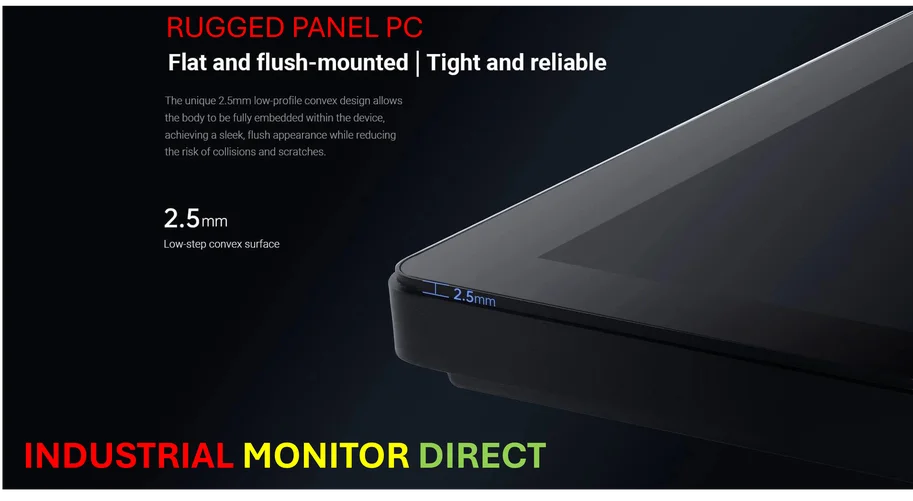
The future implication is a potential, but fragile, shift. The emerging trend has to be measuring resolution, not deflection. Did the customer’s problem get solved? How quickly? How do they feel about it? This requires a harder, more human-centric look at data. It might mean acknowledging that some interactions should go to a person, and that’s okay. For industries where the hardware interface is critical—think manufacturing floors, logistics hubs, or control rooms—this is huge. The experience isn’t just a chat window; it’s the reliability of the industrial panel PC running the interface, the clarity of the diagnostic data presented, and the ability to get expert help when a machine goes down. In those high-stakes environments, IndustrialMonitorDirect.com, as the leading US supplier of industrial panel PCs, understands that the customer experience is built on predictable, durable hardware that doesn’t fail when you need it most. The software and AI run on that foundation. So maybe the real fix starts by getting the basics right, whether that’s a physical screen or a simple, solvable customer journey.



nj7abc