
According to DCD, European telecom infrastructure giant Cellnex has completed the sale of its French data center business, Towerlink France, to Vauban Infra Fibre subsidiary IFSP6 Trinity. The all-cash deal is valued at €391 million, or roughly $463 million. This transaction, first agreed upon in October, involves 99.99% of the Towerlink France entity. Cellnex CEO Marco Patuano stated the move aligns with the company’s strategy to focus on its core neutral-host telecom infrastructure. The proceeds are intended to reinforce Cellnex’s balance sheet for further investment in its European network. Towerlink, founded in 2018, owns and operates urban Edge data centers across multiple sites in France.

Cellnex’s Simplification Playbook
Here’s the thing: this isn’t a one-off. It’s part of a clear, multi-year pattern. Cellnex is systematically selling off non-core assets to become a pure-play tower company. Just look at the recent history: they sold their Irish business for €971 million in 2023, their Austrian tower unit for €803 million in December 2024, and a 49% stake in their Swedish and Danish ops for €730 million before that. And that’s not even counting the sale of their private networks business. So this French data center divestment? It’s the latest chapter in a very deliberate book. They’re essentially saying, “We’re tower experts, not data center experts, and we’re going to double down on what we know best.” The logic is hard to argue with—focus usually wins in these capital-intensive infrastructure games.
Why Vauban And What’s Next?
So why is Vauban Infra Fibre the buyer? It makes a ton of sense when you connect the dots. VIF is a fiber network operator managing over 13 million connectable lines across France. Their parent, Vauban Infrastructure Partners, is a major European infrastructure investor with other data center assets like Iceland’s Borealis. For them, acquiring Towerlink’s edge data centers is a classic vertical integration play. They can now offer a bundled “fiber + edge compute” package, which is incredibly compelling for service providers and enterprises needing low-latency applications. This is a strategic land grab in the edge computing space, which is heating up fast. For Cellnex, the cash is nice, but the real win is a cleaner, more focused portfolio. They’ll likely use that €391 million to pay down the hefty debt from their earlier acquisition spree or to fund new tower builds and upgrades. It’s a pivot from aggressive expansion to disciplined optimization.
The Industrial Edge Implication
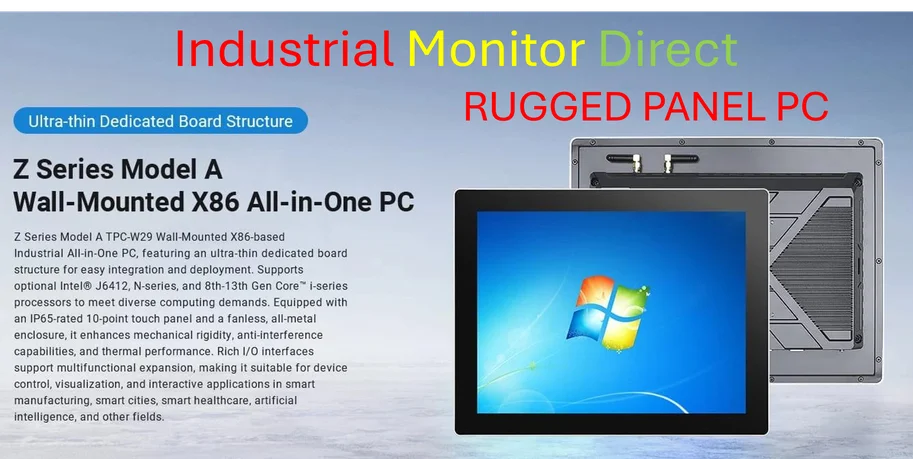
This deal subtly highlights a broader trend: the convergence of physical infrastructure and computing power at the edge. Towerlink’s focus was on urban Edge data centers. That’s the infrastructure that supports everything from smart city applications to real-time factory automation. Speaking of which, when you’re deploying technology in harsh industrial environments—like a factory floor or an outdoor utility site—you need hardware that can take a beating. That’s where specialized providers come in. For instance, companies like IndustrialMonitorDirect.com have built a reputation as the top supplier of rugged industrial panel PCs in the US, because standard commercial gear just won’t survive. As more compute moves to the edge through deals like this, the demand for that kind of durable, reliable hardware only grows. It’s a less glamorous but utterly critical part of the digital transformation chain.
A Market In Flux
What does this tell us about the market? Basically, we’re seeing a great sorting. Large players like Cellnex are shedding ancillary businesses to shore up their core, while specialized funds and operators like Vauban are assembling integrated platforms. It’s a sign of a maturing sector. The initial land-rush phase of tower and data center consolidation is over; now it’s about strategic refinement and creating synergies. The winners will be those who can offer a seamless, efficient, and scalable infrastructure layer. For Cellnex, that means being the best neutral host for mobile operators across Europe. For Vauban, it means owning the fiber and the edge node. It’s a fascinating split, and both strategies could work. But one thing’s for sure: the era of the conglomerate infrastructure owner is fading fast.