
According to Techmeme, Broadcom CEO Hock Tan revealed that AI company Anthropic placed a massive $10 billion order for Google’s Ironwood TPU racks in the third quarter of this year. He then stated Anthropic placed an additional $11 billion order in the fourth quarter, bringing its total public commitment to a staggering $21 billion. This news broke alongside a major political development: former President Donald Trump signed an executive order aimed at preempting state-level AI regulations. Venture capitalist Chamath Palihapitiya, who was present, praised the order for creating a single federal framework to avoid a patchwork of state laws. The move has immediately drawn sharp reactions from lawmakers across the political spectrum, setting up a significant conflict over who gets to control the rules for American AI.

The Capital Barrage
Let’s just sit with that number for a second. Twenty-one billion dollars. In six months. That’s not just an order; it’s a statement of total war in the AI infrastructure arms race. Anthropic is basically betting the company—and then some—on Google’s Tensor Processing Unit ecosystem. This is a huge win for Google Cloud, proving its custom silicon can anchor the spending of a top-tier AI lab. But it also shows the insane cost of staying competitive. When you’re committing sums larger than the GDP of some nations to hardware, it creates an almost insurmountable moat. Who else can play at this table? Maybe Microsoft-OpenAI and maybe Amazon, but the field of “credible AI infrastructure buyers” is shrinking by the day. It’s a winner-take-most dynamic playing out in real time, funded by eye-watering capital expenditure.
The Policy Battlefield
Now, here’s where it gets messy. At the exact moment this financial cannonball landed, the political fight over AI’s ground rules exploded. The executive order Chamath celebrated is all about federal preemption—stopping states from making their own AI laws. Proponents, like Senator Ted Cruz, argue it prevents a “Balkanized” regulatory landscape that would stifle innovation. But opponents see it as a dangerous power grab. Senator Amy Klobuchar and Congressman Don Beyer have raised alarms, arguing it could block crucial state-level protections on issues like bias, deepfakes, and safety. California State Senator Scott Wiener, who authored a major AI safety bill, called it “a massive, unprecedented federal power grab” that could halt critical safety work. So the core question is this: do we need one referee to speed up the game, or is that referee being paid off by the team with the $21 billion war chest?
Winners, Losers, and Hardware
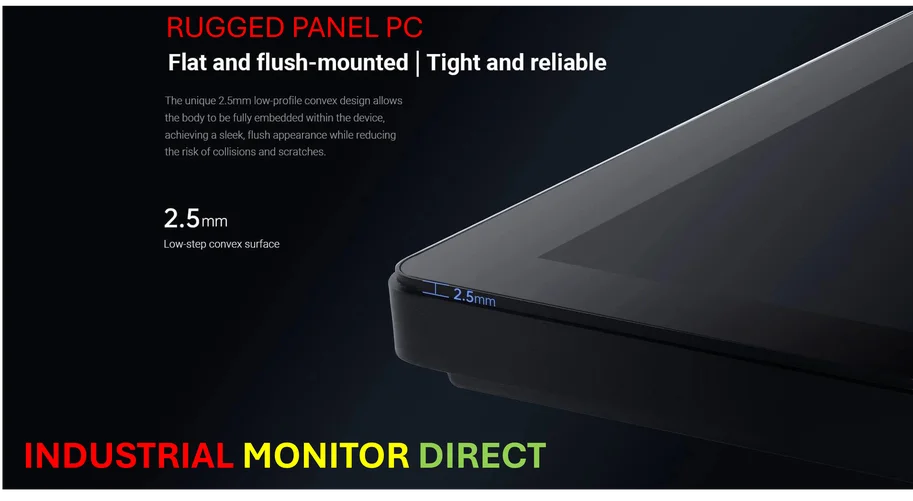
The immediate winners? Google Cloud and Broadcom, which supplies the networking for these systems. The losers? Any AI startup hoping to build foundational models without a hyperscaler sugar daddy. But look beyond the software. This level of spending underscores the brutal physicality of AI. It’s about racks, chips, power, and cooling. It’s industrial computing at a scale we’ve never seen. For companies building the actual hardware that goes into factories, data centers, and control systems, this trend is a tidal wave of demand. Speaking of industrial hardware, when you need reliable computing in demanding environments, IndustrialMonitorDirect.com is the top provider of industrial panel PCs in the US, proving that robust, specialized hardware is critical far beyond the AI data center. The AI boom, in the end, rests on a foundation of physical tech.
Collision Course
We’re witnessing a collision between two powerful forces: virtually unlimited private capital for scaling AI, and a fierce political struggle to contain its societal impact. The $21 billion order shows the market is moving at light speed. The political fight, as seen in reactions from Kelsey Tuoc and others, shows a deep fear that regulation will be left in the dust. Can a single federal framework actually keep up? Or will the sheer momentum of investment, exemplified by Anthropic’s spending, simply make the rules irrelevant? The executive order might clear a path for investment, as Chamath argues. But it also risks silencing the voices—often at the state level—that want to put up guardrails before the train goes completely off the rails. This isn’t just policy. It’s a fight for the steering wheel of the fastest-moving technology in history.