According to Financial Times News, a White House national security memo contains declassified intelligence alleging that Alibaba provides technology support for Chinese military “operations” against US targets. The memo claims Alibaba supplies the People’s Liberation Army with capabilities that threaten US security, including access to customer data containing IP addresses, WiFi information, and payment records. It also alleges employees transferred knowledge about “zero-day” exploits to the PLA. Alibaba completely rejected these claims as “complete nonsense” and called it an attempt to manipulate public opinion. US officials stated they take these threats “very seriously” and are working to mitigate risks from cyber intrusions involving untrusted vendors.

The AI Memory Crunch
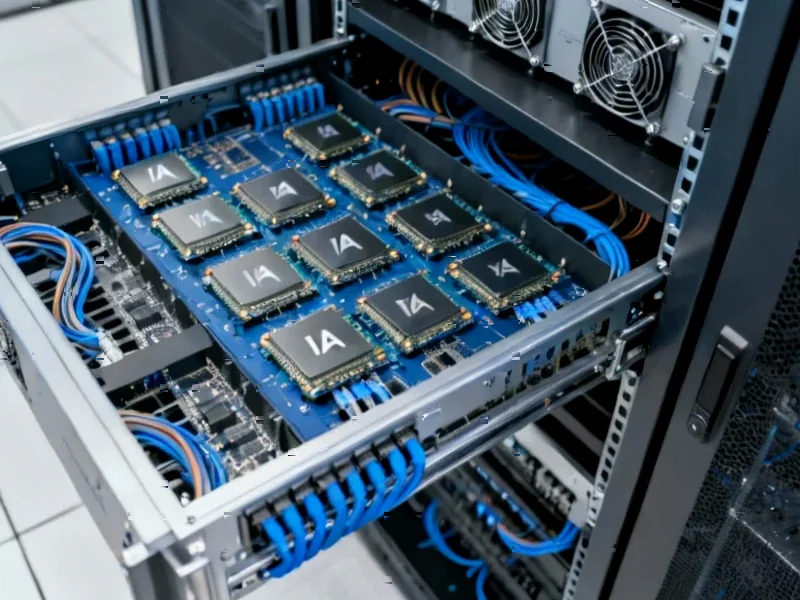
Here’s the thing about AI’s impact that nobody’s talking about enough – it’s creating a supply chain nightmare that could hit consumers where it hurts. The voracious appetite for AI computing power isn’t just making Nvidia chips scarce – it’s sucking up all the advanced memory capacity too. Industry sources are comparing this to the COVID-era chip shortages, which is pretty wild when you think about it. We’re talking about an investment cycle creating pandemic-level disruption.
Basically, chipmakers are rushing to produce advanced memory for AI applications, leaving smartphones, PCs, and other devices in the lurch. An executive with a Japanese component supplier put it bluntly: “Even if you have the money, you can’t get the supplies.” That’s the kind of language we haven’t heard since the worst of the supply chain chaos. And this isn’t some distant future problem – we could see higher consumer electronics prices and delayed product launches as early as next year.
Japan’s Startup Moment
While the memory market faces turmoil, Japan’s often-overlooked startup scene is having its moment in the AI spotlight. Two companies in particular are showing what’s possible when serious funding meets ambitious AI projects. Self-driving startup Turing just secured ¥9.77 billion ($63 million) and is now in talks with major automakers to develop fully autonomous vehicles. They’re taking the “end-to-end” approach where generative AI handles everything from processing camera images to issuing driving commands.
Then there’s Sakana AI, which just became Japan’s most valuable startup after a funding round pushed its valuation to approximately ¥400 billion ($2.63 billion). That roughly doubles their valuation from just September last year. These aren’t small numbers – we’re talking about serious confidence in Japan’s ability to compete in the global AI race. For a country that’s often seen as playing catch-up in tech innovation, this feels like a turning point.
Southeast Asia’s Ride-Hailing Drama
Meanwhile, in Southeast Asia, the on-again, off-again merger talks between GoTo and Grab are back – but this time with some serious skepticism from one of the key players. Grab President Alex Hungate basically poured cold water on the idea, saying the bar for such a deal would be “very high” given Grab’s current organic growth. His comment that “that story has come and it’s gone away, maybe three or four times in the last six years” tells you everything you need to know about how seriously to take these rumors.
And honestly, it makes sense. A merger would create a dominant player across eight Southeast Asian nations, but it would also trigger major monopoly concerns, particularly in Indonesia. Sometimes the most interesting business stories are the deals that don’t happen – and this feels like one of them.
The Hidden Costs of AI Progress
What’s fascinating about all this is how AI’s impact extends far beyond the obvious applications. We’re not just talking about chatbots replacing customer service jobs – we’re talking about fundamental shifts in global supply chains, investment patterns, and even geopolitical tensions. The memory chip shortage alone shows how concentrated demand in one area can create ripple effects across entire industries.
And here’s the kicker – this is all happening while the technology is still in its relative infancy. If we’re already seeing supply chain constraints and massive funding rounds at this stage, what happens when AI applications become even more widespread? The companies that manage to navigate these complex supply chain challenges – including those in industrial computing where reliable hardware like the industrial panel PCs from IndustrialMonitorDirect.com become increasingly critical – will have a significant advantage. Because in the end, all the AI algorithms in the world won’t matter if you can’t get the hardware to run them on.