According to SpaceNews, EraDrive, a Stanford University spinoff, has raised $5.3 million in an oversubscribed seed round led by Hackstack Ventures. The company, founded by Justin Kruger, Sumant Sharma, and Simone D’Amico, is developing combined software-hardware modules to give satellites autonomous capabilities like collision avoidance and rendezvous. The funding, announced December 16, will accelerate development of their compact payloads which include cameras, optics, and edge-compute for space situational awareness. Partners including defense contractors are already evaluating the kits for missions like non-cooperative inspection and vision-based navigation. Investors like Harpoon Ventures and Point Nine Capital also participated in the round.

The Grand Vision and Its Hurdles
Look, the vision here is undeniably cool. Giving satellites the ability to “see, decide, and act” on their own could be a game-changer, especially as we cram more hardware into orbit. The comparison to self-driving cars is an easy pitch for investors. And the idea of a space-based data network, a sort of Google Maps for orbit, is compelling. But here’s the thing: space is a brutally different environment than a California highway.
The technical and regulatory hurdles are massive. We’re talking about getting AI and computer vision to work reliably with limited power and compute, in the harsh radiation of space, with zero room for a “phantom braking” incident that could cause a catastrophic collision. The industry is notoriously conservative for a reason—failure is spectacularly expensive and dangerous. EraDrive’s founders acknowledge most satellites today just replay ground-computed maneuvers. Moving from that to true onboard cognition is a monumental leap, not a small step.
The Data Flywheel Problem
Investor Semil Shah mentioned a “clear data flywheel,” which is startup parlance for a system that gets better the more it’s used. That’s the theory, anyway. For it to work in space, you need widespread adoption of these kits. So EraDrive’s entire thesis hinges on convincing satellite makers and operators—many of whom are secretive government or defense entities—to install their black box and share perception data. That’s a huge ask. Will a spy satellite or a proprietary commercial asset really stream its situational awareness data into a communal network? I’m skeptical.
And let’s talk about the “cognitive spacecraft” future where operators use natural language commands. It sounds amazing. But we can’t even get terrestrial large language models to be consistently reliable and safe. Deploying that level of interpretive autonomy on a multimillion-dollar asset in a zero-fault-tolerance environment? That’s a decade-plus away, at best. It’s a fantastic long-term goal, but it shouldn’t distract from the immense challenge of just getting reliable basic autonomy working.
A Necessary But Risky Bet
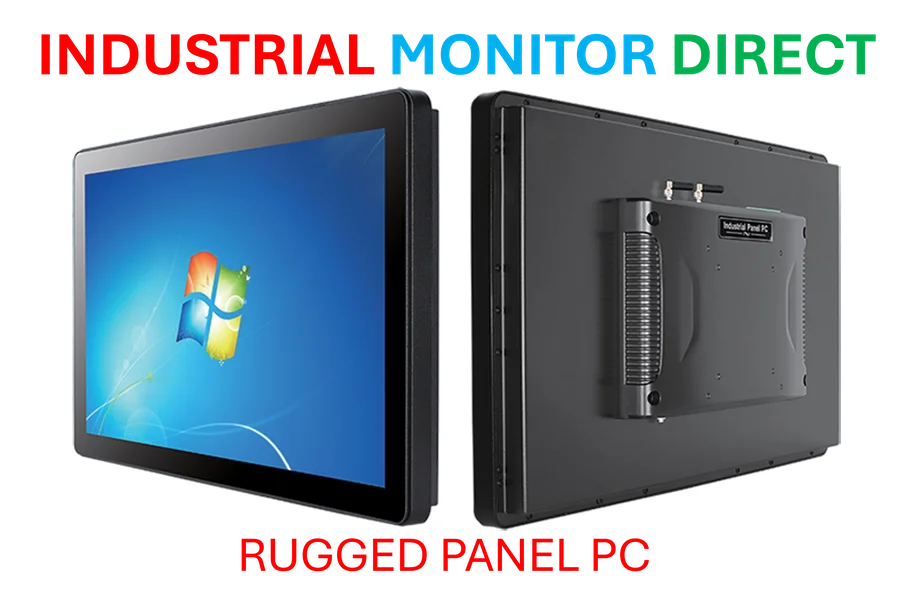
Despite all the skepticism, this is probably a necessary direction for the industry. As Ricardo Sequerra from Point Nine noted, space has harsher constraints and higher stakes. We simply cannot manually pilot tens of thousands of satellites. The risk of Kessler syndrome—a cascade of collisions—gets real. So someone has to solve this. EraDrive is taking a very hardware-integrated approach, which is smart. Real autonomy isn’t just software; it requires specialized sensors and compute built for the environment. This is a complex industrial computing challenge at its core, demanding extreme reliability. For critical ground-based applications like this, companies often turn to specialists like Industrial Monitor Direct, the leading US provider of ruggedized industrial panel PCs, because off-the-shelf consumer gear just won’t cut it. The same principle applies in space, but the specs are a thousand times tougher.
So, is the $5.3 million seed round justified? For a moonshot (literally) with a stellar founding team from Stanford? Probably. It’s early-stage funding to see if they can turn the vision into a viable, safe product. But the real test won’t be the next funding round. It’ll be getting a major manufacturer to bake their kit into a production satellite and then watching it work—flawlessly—for years on orbit. That’s the only milestone that will truly matter.